the most pernicious race of little odious vermin
The King of Brobdingnag's judgment of humanity, delivered in the climactic sixth audience of his interrogation of Gulliver, is the most concentrated expression of Swift's satirical fury in the entire work. After five long sessions in which Gulliver has delivered a panegyric on English government, law, religion, and military achievement, the king takes the narrator into his hands, strokes him gently, and pronounces a verdict that reduces all of European civilization to the status of a biological pest. The phrase "the most pernicious race of little odious vermin that nature ever suffered to crawl upon the surface of the earth" is not a casual insult but the logical conclusion of a systematic philosophical inquiry. It is the moment when the entire apparatus of Gulliver's self-justification collapses, and the reader is forced to see the narrator's world through the king's unsparing eyes.
The Context of the Condemnation
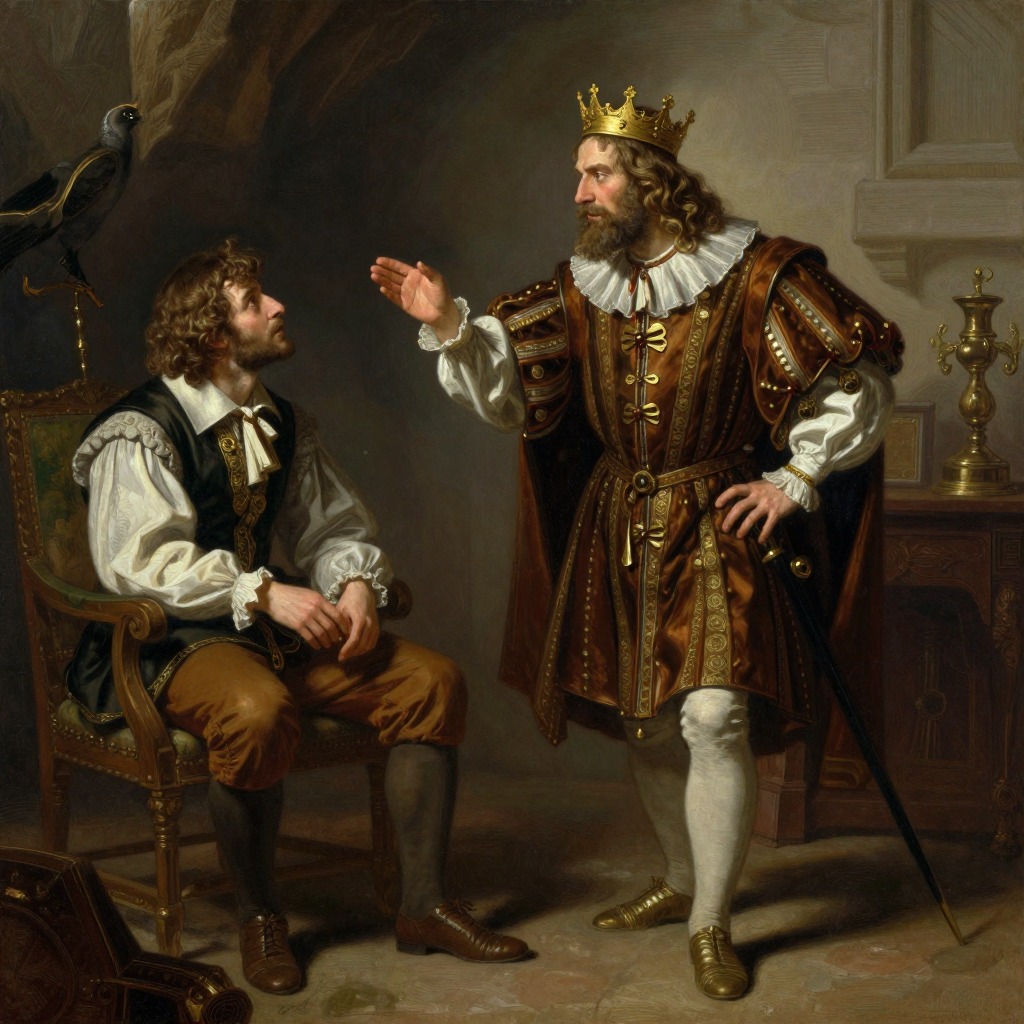
The king's verdict emerges from a series of audiences in which Gulliver, at the monarch's request, has described the institutions of England. Gulliver speaks of the House of Peers as "persons of the noblest blood and of the most ancient and ample patrimonies," of the House of Commons as "freely picked and culled out by the people themselves," and of the courts of justice as presided over by "venerable sages and interpreters of the law." The king listens with attention, taking notes, and then in a sixth audience proposes "many doubts, queries, and objections upon every article." He asks whether noble titles are sometimes purchased through court favorites, whether bishops are promoted for sanctity or for servility, whether elections can be influenced by a "strong purse," whether lawyers plead for unjust causes, and whether a standing army is compatible with liberty. Gulliver's answers, however artfully he tries to put the best face on his country, only confirm the king's suspicion that the entire system is a machinery of corruption. The king then recapitulates the sum of all Gulliver has spoken, compares the questions with the answers, and delivers his devastating conclusion.
The Anatomy of the Insult
Every word in the king's phrase is chosen for maximum corrosive effect. "Pernicious" implies active harm, not mere insignificance. "Race" suggests a biological category, a fixed and hereditary nature. "Little" and "odious" work together to diminish and disgust. "Vermin" is the key term: it classifies humans not as rational creatures but as pests—rats, mice, insects—that infest and spoil whatever they touch. The verb "crawl" denies humanity even the dignity of upright posture, reducing it to the level of a beetle or a worm. The phrase "suffered to crawl" implies that nature has made a mistake in permitting such creatures to exist at all. The king does not say that Europeans are wicked or foolish; he says they are a plague. The insult is not moral but ontological: the problem is not what Europeans do but what they are.
Gulliver's Reaction and the Narrative Irony
Gulliver reports the king's words with apparent indignation, but his own narrative undercuts any possible defense. He admits that he "artfully eluded many of his questions, and gave to every point a more favorable turn, by many degrees, than the strictness of truth would allow." Even this sanitized version is enough to provoke the king's condemnation. The reader is left to imagine what the king would have said if Gulliver had told the truth. Gulliver tries to salvage his country's honor by blaming the king's isolation: "great allowances should be given to a king who lives wholly secluded from the rest of the world." But the irony is that the king's seclusion is precisely what enables him to see clearly. He has no stake in European politics, no national pride to defend, no party allegiance to satisfy. His judgment is the judgment of an outsider who has no reason to flatter. The more Gulliver protests, the more he confirms the king's diagnosis.
The Thematic Significance
The phrase is the thematic center of the Brobdingnag voyage and arguably of the entire book. In Lilliput, Gulliver is a giant among pygmies, and the satire is directed at the pettiness of European court intrigue. In Brobdingnag, Gulliver is a pygmy among giants, and the satire is directed at the moral squalor of European civilization as seen from a higher vantage point. The king's verdict is the culmination of this reversal of perspective. It is also the moment when Swift's misanthropy becomes explicit. The king's words echo Swift's own famous remark that he hated the species called man. The phrase "the most pernicious race of little odious vermin" is not a political opinion but a philosophical anthropology. It asserts that human beings, at least as they have organized themselves in Europe, are not merely flawed but fundamentally contemptible. The king's rejection of Gulliver's offer to teach him the secret of gunpowder—"he would rather lose half his kingdom than be privy to such a secret"—reinforces the same point: European "achievements" in warfare and statecraft are not signs of progress but of moral deformity.
The Afterlife of the Phrase
The king's condemnation has entered the language as a shorthand for Swift's pessimism. It is often quoted out of context as evidence of Swift's hatred of humanity, but within the book it functions as a devastating critique of the gap between European self-congratulation and European reality. The phrase is the logical endpoint of the relativism that structures the entire narrative: just as the Lilliputians look ridiculous to Gulliver, so Gulliver and his countrymen look like vermin to the King of Brobdingnag. The reader who has laughed at the Lilliputians is now forced to see himself through the same lens. The king's words are not the last word on humanity—Swift's own life and friendships contradict such absolute misanthropy—but they are the last word on the particular civilization that Gulliver represents. They are the judgment of reason on the pretensions of power.